The nitrogen crisis is a greater threat to the port than COVID-19
They really do exist: maritime companies that remain positive, despite COVID-19, Brexit, and nitrogen problems. Rijnmond spoke to three parties active in logistics. Although they saw their revenue decline last year, they remain hopeful for the future. Provided the corona crisis does not last too long and the nitrogen crisis is resolved quickly.
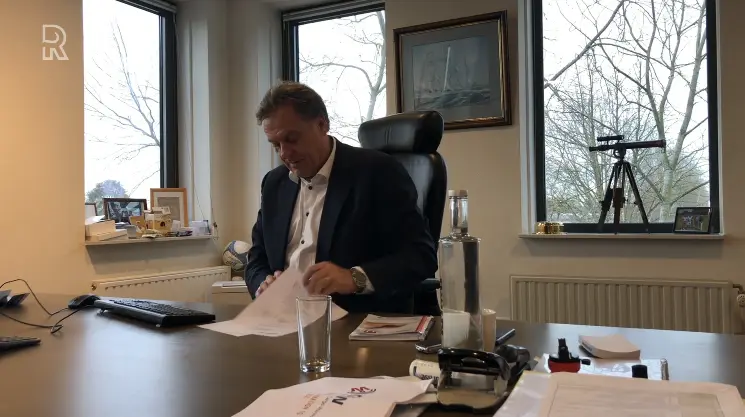
Cuno Vat, CEO of transport company Neele-Vat Logistics, is one such optimist. Since taking office as director (2014), he has seen the family business’s profits grow steadily. He had also expected a substantial increase in turnover for 2020, but COVID-19 put a stop to that.
Vat: “That was a setback. The months of April, May, and June were disappointing, especially in the sea freight department. I sometimes checked there to see if the phone was still working and if the email was switched on. We also had some weaker months in transport. But I am not dissatisfied with 2020 as a whole. We generated stable revenue compared to the previous year and were able to keep all employees employed. I am proud of that.”
Kees Groeneveld, Director of Euro Nordic Logistics, also still has a smile on his face. The company, with branches in Antwerp and Moerdijk, has its headquarters in Ridderkerk and specialises in the shipping of dry bulk and agricultural products between Scandinavia and Europe. “We had a good year business-wise. We are mainly in grains and animal feed, and yes, those cows keep eating, of course. If you are in coal or oil, it is a different story.”
In hindsight, he is surprised by the positive course of the first corona year. “We really had anxious months, but after the summer it picked up and has remained very stable since then. People keep consuming, and then everything has to be manufactured and shipped.”
Maasvlakte
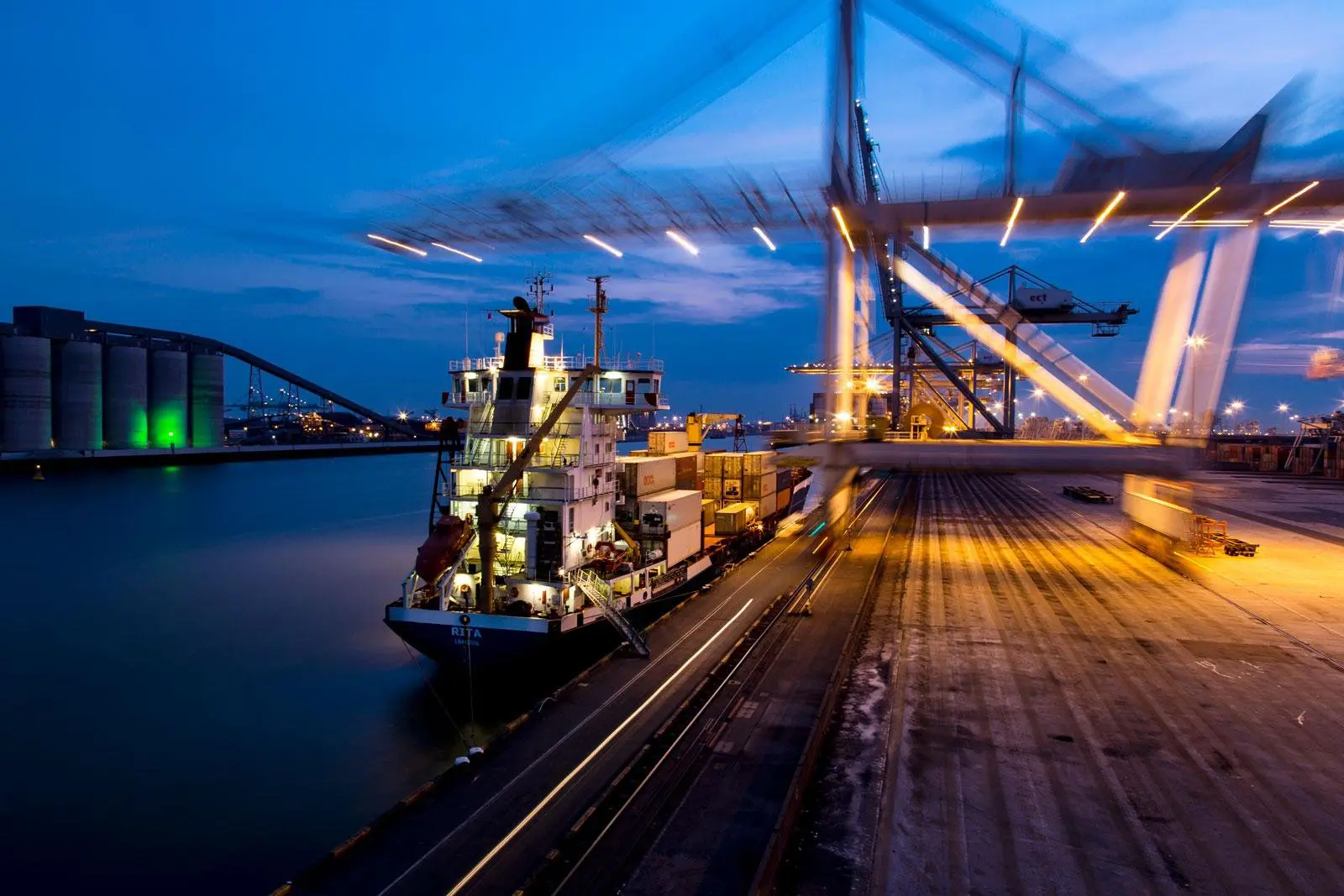
Leo Ruijs, Director of container handling company ECT, found 2020 to be ‘not an easy year’ in itself. The world’s largest seagoing vessels dock at the terminal on the Maasvlakte, delivering and departing large quantities of containers. These are transported to the hinterland by truck, rail, and inland waterways. Due to the COVID-19 pandemic, Ruijs saw container volumes decline across the board. It was particularly tough at the beginning of 2020: factories in China stood idle due to the lockdown. From June onwards, the economy picked up again and container handling recovered.
Ruijs: “The outlook in the spring was worse than how it ultimately turned out. On the whole, with 6 to 7 percent fewer container movements, we didn’t even have such a bad year. We are now back at an acceptable level. And shipping companies remain positive about cargo flows, despite the lockdown in Europe. Because consumers continue to spend a lot of money on online shopping.”
Broad range of services
In hindsight, Cuno Vat believes that the steady course of the past few years helped his company through the crisis. “We have a good team and many different customers. That, combined with a broad range of services from sea freight to warehousing and road transport, is paying off now.”
Although the transport division at Neele-Vat Logistics declined by 5 percent, the CEO is not dissatisfied with that. “In May, I was a little less cheerful with my wife than I am now. But I have seen that we can weather a crisis. And we are a family business, that helps. Our survival does not depend on a less-than-good year.”
Despite everything, the company has continued to invest: in automation and personnel (900 employees). Vat also hopes to be able to continue growing. At least three expansions are in the pipeline: a new headquarters and distribution center at Port Park Pernis and a ‘crossdock’ distribution center in the Waalhaven. “Here we will transport more containers by train. This allows us to limit the number of truck movements and reduce our CO2 emissions.”
Brexit
The first few weeks after Brexit have not been easy for Cuno Vat. Despite what he describes as good preparations, many other parties in the supply chain turned out to have started too late. “While shipping companies, carriers, customs agents, and governments depend on each other for data exchange, it’s all hands on deck. That will last for a few more weeks, but we will eventually get through this together,” is his expectation.
Euro Nordic Logistics also handles cargo to and from the United Kingdom. Preparations for Brexit have consumed a great deal of time and manpower here as well. Customers built up stocks on both sides of the North Sea during the preparation to the trade agreement. According to Groeneveld, this resulted in some transport and storage problems over the last few months, but the first weeks of this new year have been running smoothly so far.
He does expect cargo flows to be somewhat lower in the coming period. But across the board, that will likely cause few problems. “The signs are good. We might not grow, but that isn’t necessary every year.”
Records broken
Leo Ruijs of ECT is also optimistic about the coming year. As an import port for ships from Asia, the company is dependent on the local economy. And that is running at full capacity again. “Records have even been broken at the terminals of our sister companies in China. And we are going to reap the benefits of that.”
The high consumer demand is causing problems, however, because fewer ships are available. And there is a shortage of empty containers for China, which is driving up prices enormously. “We simply cannot fill our container yard with empty containers if we want to keep it running.”
He expects a five percent recovery compared to the cargo losses in 2020, but that depends on how long the Covid crisis lasts. “I hope that with the vaccine the number of infections drops quickly and that the English variant stays far away from us. That is of great economic importance to us. Because if consumer confidence falls and we all keep our money in our pockets, that has an effect. Not only here in the Netherlands, but also in Germany, for example, to which we supply a lot.”
Nitrogen problems
Inveterate optimist Kees Groeneveld concludes with a warning to politicians: get to work to support the energy transition. “The Port of Rotterdam must go green to reduce CO2 emissions. That is necessary, but we must remain realistic,” states the logistics service provider.
Factories want to switch from fossil fuels to green alternatives, but are currently unable to do so due to the nitrogen problems. Ports like Antwerp and Hamburg will soon walk away with the spoils. Billions are being made available in those countries, while our government is offering 35 million in return. If no decision is made regarding nitrogen, that poses a greater threat to the future of the port than a coronavirus crisis. Investors want certainty for decades; give it to them.
Other news
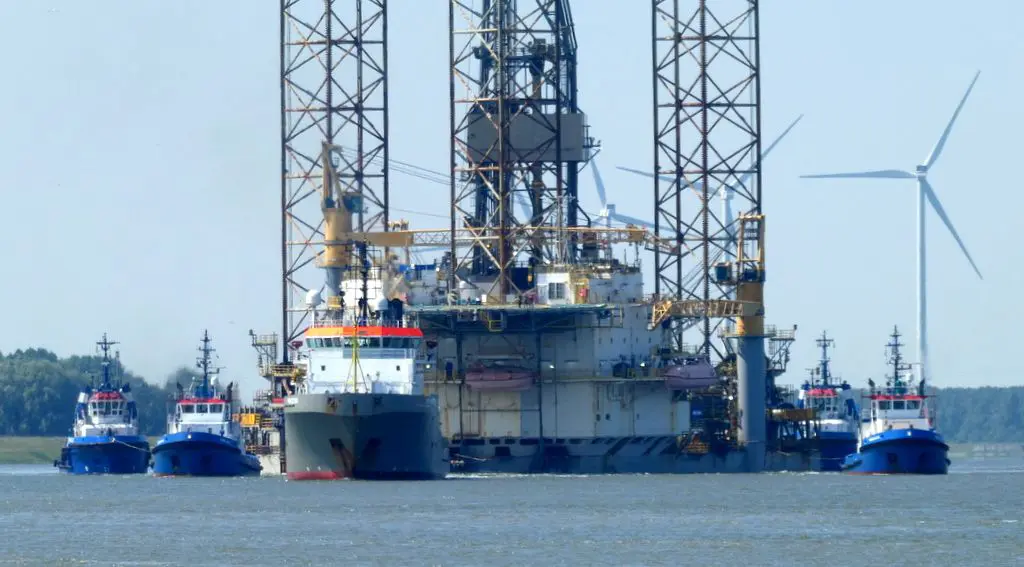
An impressive sight at the Maasmond
The self-elevated drilling rig, Prospector 1, has safely arrived at Mammoet in Schiedam for repair and mobilization.
Read more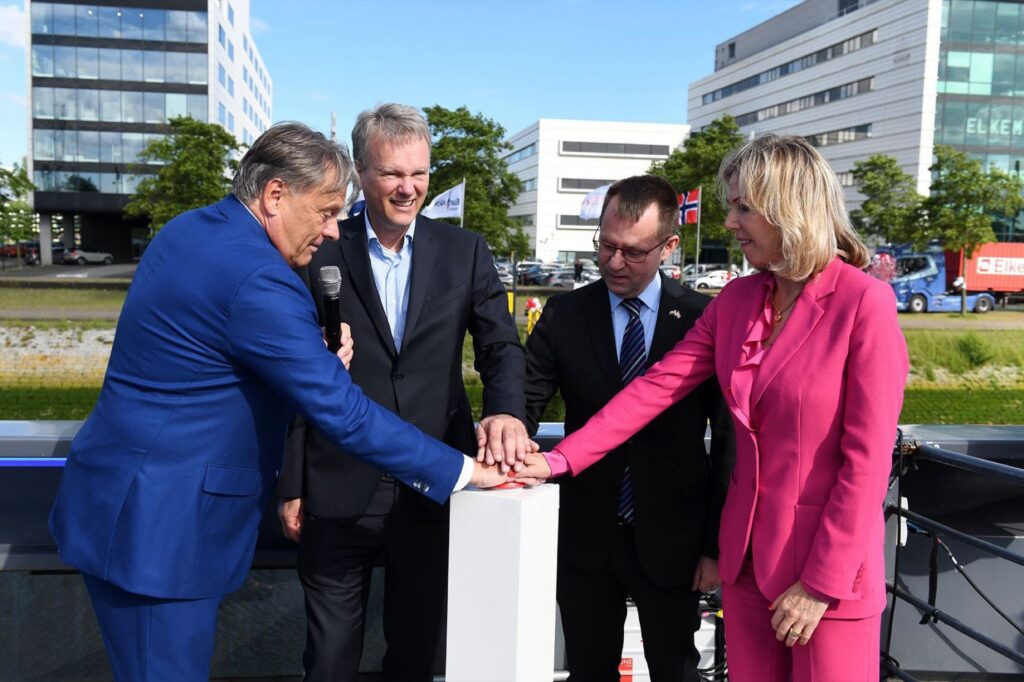
A magnificent milestone for Euro Nordic Logistics
A special moment in the company history: our new headquarters at Waalhaven in Rotterdam are officially opened.
Read more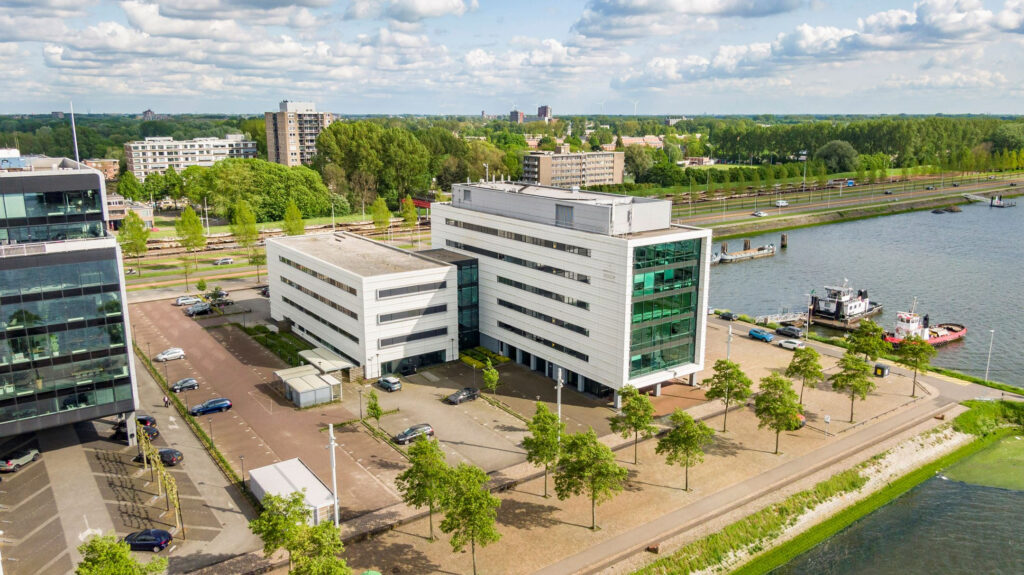
Euro Nordic Logistics is moving
Euro Nordic Logistics has relocated her headquarters to the heart of the Rotterdam port: Waalhaven.
Read more